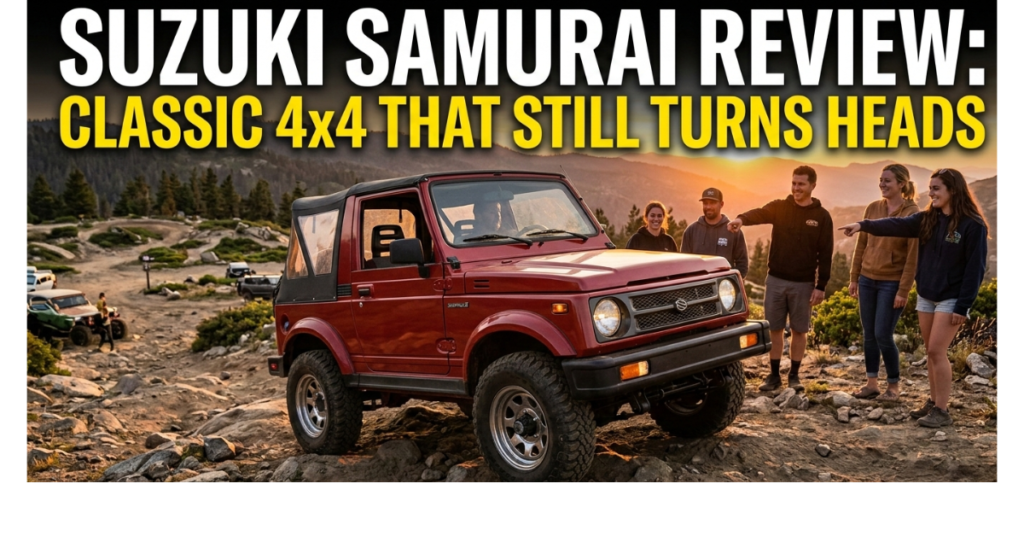

If you’ve ever spotted a tiny boxy 4×4 climbing trails that larger SUVs struggle with, chances are it was a Suzuki Samurai. Despite its compact size, this legendary off-road vehicle has earned a cult following that refuses to fade. From weekend trail rigs to restored classics, the Samurai remains one of the most recognizable small SUVs ever made.
In this guide, we’ll break down what makes the Suzuki Samurai special, explore key model years like the 1987 Suzuki Samurai, and help you understand what to expect if you’re looking for a Suzuki Samurai for sale today.
A Brief History of the Suzuki Samurai
Suzuki introduced the Samurai to the U.S. market in the mid-1980s, at a time when compact off-road vehicles were rare. It was based on the Japanese Suzuki Jimny but adapted for international markets.
Why the Samurai Became Popular
-
Lightweight body and simple mechanics
-
True part-time 4WD system
-
Affordable pricing compared to larger SUVs
-
Excellent off-road capability straight from the factory
The Samurai quickly gained attention among off-road enthusiasts, farmers, and anyone who wanted a rugged vehicle without unnecessary complexity.
Key Suzuki Samurai Model Years Explained
Not all Samurai models are the same. Here’s a breakdown of the most searched and talked-about years.
1986 Suzuki Samurai
-
First widely available U.S. model
-
1.3L inline-4 engine
-
Carbureted fuel system
-
Extremely simple and easy to repair
This year is prized by purists who love mechanical simplicity.
1987 Suzuki Samurai
The 1987 Suzuki Samurai is one of the most iconic versions.
Highlights:
-
Improved reliability over early models
-
Solid axles front and rear
-
Manual transmission standard
Many enthusiasts consider this year the sweet spot between originality and usability.
1988 Suzuki Samurai
-
Minor refinements in interior and emissions
-
Similar drivetrain to 1987
-
Popular for off-road builds and restorations
If you’re browsing listings for an 1988 Samurai, expect plenty of modified examples.
1995 Samurai
The 1995 Samurai is rare in some markets but still highly sought after.
What makes it special:
-
Later production refinements
-
Better parts compatibility
-
Often found in cleaner condition
Listings like 1995 Samurai for sale tend to command higher prices due to scarcity.
Samurai Performance and Off-Road Capability
Don’t let the size fool you—the Samurai is a beast off the pavement.
Off-Road Strengths
-
Extremely light weight (under 2,100 lbs)
-
Short wheelbase for tight trails
-
Solid axles provide excellent articulation
-
Simple transfer case with low range
These qualities make it a favorite for rock crawling, mudding, and trail riding.
Daily Driving: What to Expect
While fun, the Samurai wasn’t designed for highway luxury.
Pros:
-
Easy to park
-
Great visibility
-
Low maintenance costs
Cons:
-
Slow acceleration
-
Basic interior
-
Noisy at highway speeds
Most buyers today treat it as a weekend vehicle rather than a daily commuter.
Samurai for Sale: What Buyers Should Know
If you’re searching for a Samurai for sale near me, here’s what to check before buying.
Inspection Checklist
-
Frame rust (very common)
-
Engine compression
-
Transfer case engagement
-
Steering play
-
Suspension modifications quality
Price Range Approximate
-
Project condition: Low budget
-
Clean stock examples: Mid-range
-
Fully restored or modified builds: Premium pricing
Models like the 1987 Samurai often hold their value better due to popularity.
Why the Samurai Still Has a Cult Following
Even decades later, the Samurai continues to attract fans.
Reasons it hasn’t faded away:
-
Endless aftermarket support
-
Easy DIY repairs
-
Strong off-road community
-
Classic, boxy styling
Few vehicles offer this mix of simplicity and character.
FAQs About the Suzuki Samurai
Is the Samurai reliable?
Yes, when properly maintained. Its simple engine and drivetrain are known for durability.
Is the Samurai street legal?
In most regions, yes. Always check local laws, especially for modified vehicles.
Why are Samurai prices increasing?
Growing nostalgia, limited supply, and strong off-road demand have driven prices up.
Is the Samurai good for beginners in off-roading?
Absolutely. Its light weight and mechanical simplicity make it beginner-friendly.
Can I still find a Samurai for sale today?
Yes, though availability is limited. Searching locally and checking enthusiast forums helps.
Conclusion: Is the Suzuki Samurai Worth It?
The Suzuki Samurai isn’t just an old SUV—it’s a symbol of pure, uncomplicated off-roading. Whether you’re eyeing an 1986 Suzuki Samurai, a classic 1987 model, or even a rare 1995 Suzuki Samurai, this vehicle delivers personality that modern SUVs often lack.
If you value simplicity, trail capability, and classic charm, the Samurai is absolutely worth exploring. Check current listings, compare models, and consider joining an off-road community to get the most out of ownership.