
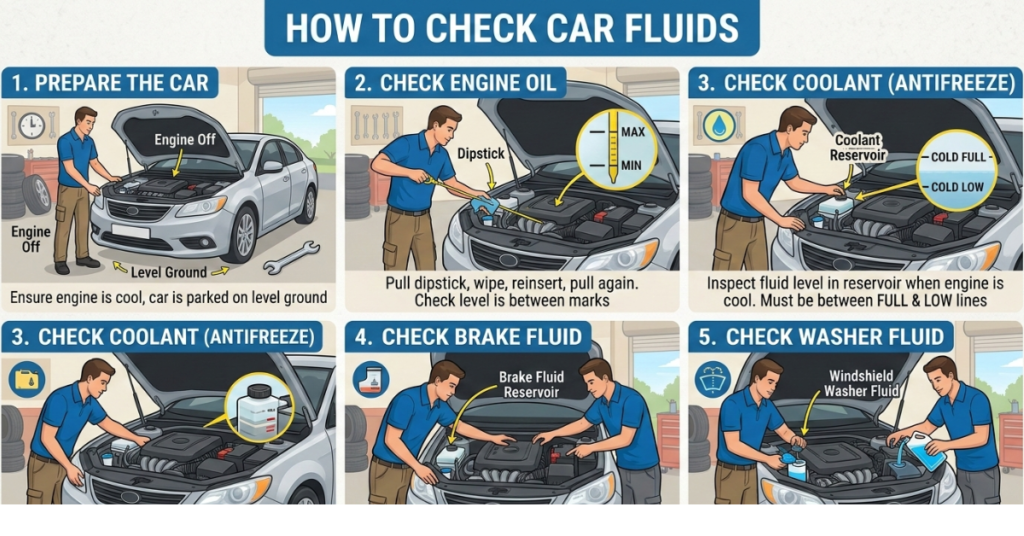

Maintaining your car’s fluids may seem like a minor task, but it’s one of the easiest ways to prevent costly repairs and keep your vehicle running smoothly. Whether you’re a beginner or a seasoned driver, knowing how to check car fluids is essential. From engine oil to brake fluid, each liquid plays a critical role in your car’s performance. Let’s break down everything you need to know.
Why Checking Car Fluids Matters
Car fluids aren’t just there for show—they keep your engine cool, your brakes responsive, and your transmission smooth. Ignoring fluid levels can lead to:
-
Overheating and engine damage
-
Reduced braking performance
-
Transmission issues
-
Increased wear and tear
Regular checks are inexpensive and can save you thousands in repairs later. Think of it as a simple health check-up for your car.
Essential Car Fluids to Check
Here are the main fluids every car owner should monitor regularly:
1. Engine Oil
Engine oil lubricates moving parts, reduces friction, and prevents overheating. To check:
-
Park your car on a level surface and turn off the engine.
-
Pull out the dipstick, wipe it clean, and reinsert it fully.
-
Remove the dipstick again and check the oil level and color.
-
Light amber = good condition
-
Dark or gritty = time for a change
-
Tip: Check oil at least once a month or before long trips.
2. Coolant/Antifreeze
Coolant prevents your engine from overheating and protects it in cold weather.
-
Locate the coolant reservoir (usually translucent plastic).
-
Check the level against the “MIN” and “MAX” marks.
-
Never open the radiator cap when the engine is hot.
Note: Top up with a 50/50 mix of coolant and water if levels are low.
3. Brake Fluid
Brake fluid transfers force from your brake pedal to the brakes themselves.
-
Find the brake fluid reservoir under the hood.
-
Ensure fluid is between the minimum and maximum marks.
-
Look for contamination (cloudy or dark fluid) and replace if needed.
Safety Tip: Brake fluid is toxic—avoid skin contact.
4. Transmission Fluid
Transmission fluid lubricates gears and ensures smooth shifting.
-
Automatic cars: Check with the engine warm and car running (dipstick usually labeled “ATF”).
-
Manual cars: Check via fill plug on the transmission housing.
-
Fluid should be reddish and clear; brown or burnt-smelling fluid needs replacing.
5. Power Steering Fluid
This fluid keeps steering effortless and responsive.
-
Locate the reservoir, usually near the engine bay’s front.
-
Ensure the fluid level is between the minimum and maximum marks.
-
Top up if necessary, using the fluid type specified in your owner’s manual.
6. Windshield Washer Fluid
While it doesn’t affect engine performance, washer fluid improves visibility.
-
Open the reservoir and fill with washer fluid.
-
Check periodically, especially in winter when freezing can occur.
Tips for Checking Car Fluids Safely
-
Always check fluids on a flat surface.
-
Wear gloves to prevent skin contact.
-
Consult your car manual for recommended fluid types.
-
Never mix different brands or types unless specified.
FAQs About Checking Car Fluids
Q1: How often should I check my car fluids?
A: Ideally, check engine oil monthly, and other fluids at least every three months or before long trips.
Q2: Can I drive with low car fluids?
A: It’s risky. Low engine oil or brake fluid can cause severe damage or accidents.
Q3: How do I know if a fluid needs replacing?
A: Check for color changes, cloudiness, or a burnt smell. If in doubt, replace it or consult a mechanic.
Q4: Is it okay to mix old and new fluids?
A: Generally, no. Always follow your car manufacturer’s recommendations.
Conclusion
Knowing how to check car fluids is a small effort that yields big benefits. From engine oil to brake fluid, keeping fluids at proper levels ensures safety, longevity, and peak performance. Make it a habit to inspect your car every few months, and you’ll avoid costly repairs down the road.