
Introduction
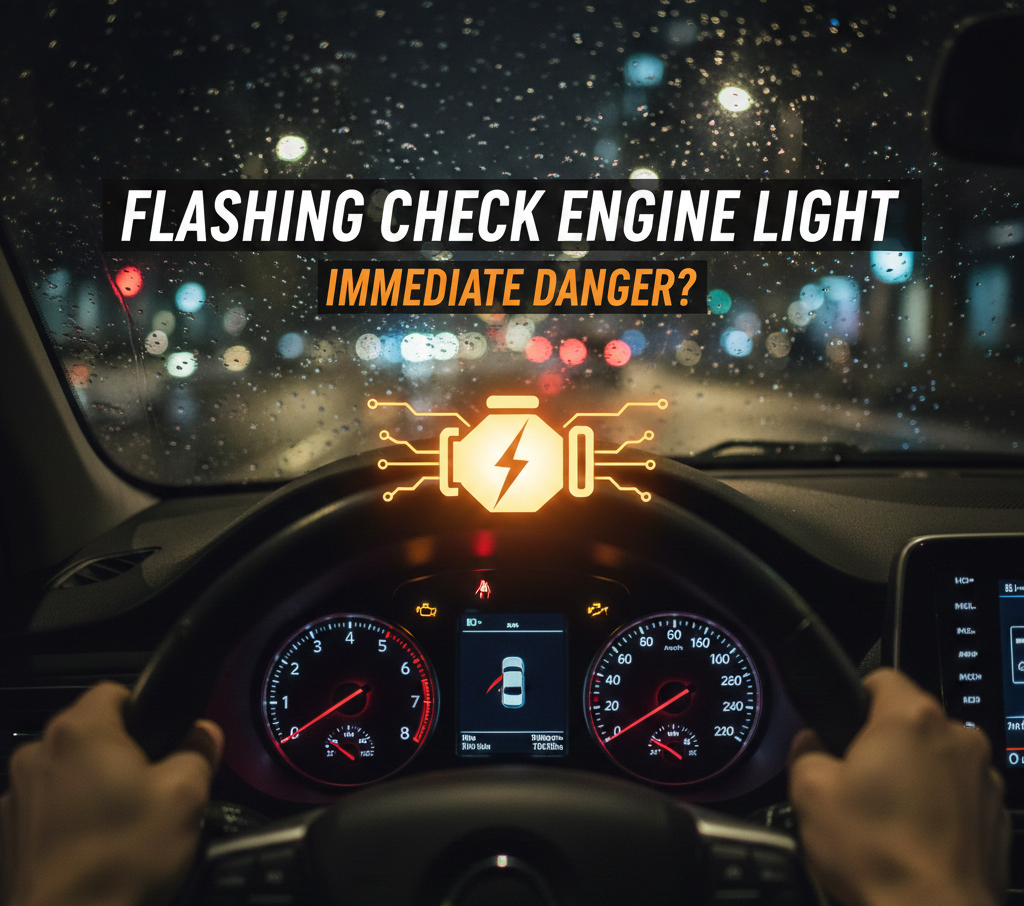
Have you ever noticed the flashing check engine light on your dashboard and wondered, “What now?” It’s a common sight for car owners, but the flashing check engine light isn’t something you should ignore. Unlike a steady light, a flashing check engine light often indicates a serious issue that could lead to expensive damage if left unchecked. In this article, we’ll break down the reasons behind a flashing check engine light and what steps you should take to avoid bigger problems.
What Does a Flashing Check Engine Light Mean?
When the check engine light starts blinking instead of staying solid, it signals that there’s an issue that requires immediate attention. A flashing light typically indicates that the engine is misfiring, which could damage the catalytic converter. The catalytic converter is a critical component in reducing harmful emissions, and ignoring the issue could lead to expensive repairs down the road.
Common Causes of a Flashing Check Engine Light
The flashing check engine light can be caused by various issues, ranging from simple fixes to more complicated engine problems. Below are some of the most common reasons:
1. Engine Misfire
An engine misfire occurs when one or more cylinders in your engine fail to fire properly. This can happen due to faulty spark plugs, ignition coils, or fuel injectors. When the engine misfires, it can cause the flashing light. If left unchecked, this issue can damage the engine or the catalytic converter.
2. Faulty Oxygen Sensor
The oxygen sensor helps regulate the air-fuel ratio, ensuring your engine runs efficiently. A malfunctioning oxygen sensor can cause an imbalance in the fuel mixture, leading to a misfire. This is often another culprit behind a flashing check engine light.
3. Problems with the Catalytic Converter
A malfunctioning catalytic converter can prevent your vehicle from meeting emission standards. If your catalytic converter becomes clogged or damaged, it may cause a flashing check engine light. This problem is usually more serious, as ignoring it can result in high repair costs.
4. Loose or Damaged Gas Cap
A simple but often overlooked reason for a flashing check engine light is a loose or damaged gas cap. This can cause fuel vapors to leak, affecting the vehicle’s fuel system. If your gas cap isn’t tightened properly, it can trigger the check engine light.
5. Bad Fuel Injectors
Fuel injectors play a vital role in delivering fuel to the engine. When they get clogged or damaged, the engine may struggle to run smoothly, triggering a flashing light on the dashboard. Ignoring this issue can cause fuel to spill into the engine, leading to a misfire and engine damage.
What Should You Do When the Engine Light Is Flashing?
If your engine light is flashing, it’s important to take immediate action. Here are the steps you should follow:
1. Reduce Your Speed and Drive Gently
If your car starts to misfire, driving aggressively can worsen the issue. Keep your speed down and avoid sudden acceleration or braking until you can get the vehicle checked.
2. Check for Obvious Issues
Take a moment to check for any obvious issues, such as a loose gas cap. If everything looks normal, it’s time to head to a mechanic to avoid further damage.
3. Visit a Mechanic ASAP
A flashing check engine light demands urgent attention. Drive to the nearest repair shop or contact a mobile mechanic if you’re unable to drive safely. They’ll use a diagnostic tool to pinpoint the problem and provide the necessary repairs.
Can I Continue Driving with a Flashing Check Engine Light?
While it’s tempting to ignore a flashing check engine light, especially if the car seems to be driving fine, it’s not recommended. Continuing to drive with a misfiring engine can lead to severe damage, including:
-
Catalytic Converter Damage: As mentioned earlier, misfires and engine problems can cause the catalytic converter to overheat, which may result in costly repairs.
-
Engine Damage: Persistent misfires can wear out other components of the engine, leading to much bigger (and more expensive) issues.
-
Fuel Efficiency Loss: When your engine isn’t working efficiently, your fuel efficiency will drop, leading to higher fuel costs.
It’s always best to address the issue as soon as possible to avoid more serious problems.
How to Prevent a Flashing Check Engine Light
While you can’t prevent all issues that might trigger a flashing check engine light, regular maintenance can help minimize the chances of an emergency:
-
Regularly Check and Replace Spark Plugs
-
Ensure Proper Fuel System Maintenance
-
Have Routine Inspections of Engine Components
-
Address Minor Issues Before They Turn Serious
FAQ
What does it mean when the check engine light flashes?
A flashing check engine light typically means that the engine is misfiring. It’s important to address this issue immediately to avoid further damage to your vehicle.
How serious is a flashing check engine light?
It’s a serious issue that should not be ignored. A flashing light could indicate engine misfires, which can damage the catalytic converter and other engine components.
Can I drive my car with a flashing check engine light?
It’s not recommended to drive with a flashing check engine light. The misfire can lead to further engine damage or reduce the efficiency of your vehicle.
How much does it cost to fix a check engine light?
Repair costs vary depending on the issue. Simple fixes like replacing a gas cap or spark plugs may be inexpensive, but repairs for a damaged catalytic converter or fuel system can be quite costly.
Can I reset the check engine light myself?
While you can use an OBD-II scanner to reset the light, it’s crucial to first diagnose and fix the problem to prevent further damage.
Also Read: Apollo Car Price
Conclusion
A flashing check engine light is a clear sign that something is wrong with your vehicle, and it’s important not to ignore it. Whether it’s an engine misfire, a faulty oxygen sensor, or a damaged catalytic converter, addressing the issue quickly can save you from costly repairs in the future. Keep an eye on your vehicle’s health with regular maintenance, and always take a check engine light seriously. If you’re unsure about the cause, don’t hesitate to visit a mechanic to get to the bottom of the issue.