
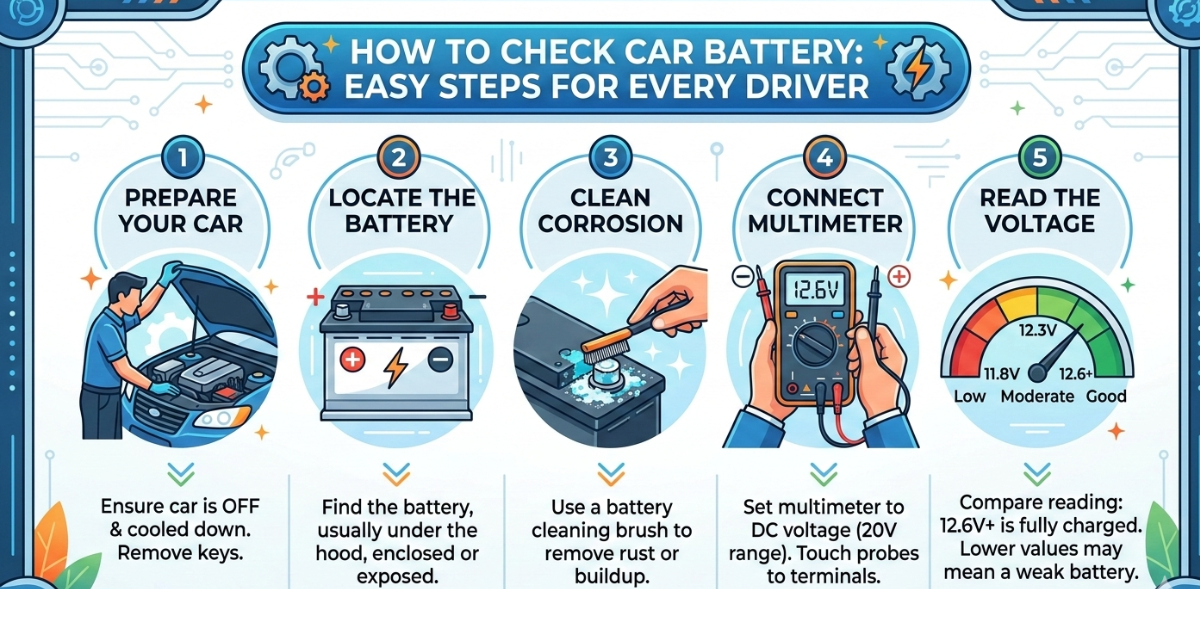

Your car battery is like the heart of your vehicle—it keeps everything running smoothly. But what happens when it starts to weaken? Knowing how to check a car battery can save you from unexpected breakdowns and expensive repairs. In this guide, we’ll cover practical ways to test your battery’s life, health, and voltage, whether you have a multimeter or not.
Why Checking Your Car Battery Matters
A dead battery can leave you stranded and frustrated. Regular checks ensure your car starts reliably and prevents damage to your alternator or electrical system. Some key reasons to monitor your battery include:
-
Avoiding unexpected breakdowns
-
Prolonging battery life
-
Ensuring consistent electrical performance
-
Saving money on emergency replacements
By learning how to check car battery health, you can take proactive steps before trouble strikes.
How to Check Car Battery Health
There are several ways to determine the health of your car battery. Let’s break them down:
1. Visual Inspection
Start simple:
-
Look for corrosion on terminals
-
Check for cracks or leaks in the battery casing
-
Ensure cables are tightly connected
-
Inspect for bulging or swelling
A visual check can reveal obvious problems that affect performance.
2. Checking Battery Voltage
Battery voltage tells you how much charge your battery holds. Here’s how to measure it:
Without a Multimeter
-
Turn on the headlights; dim lights may indicate a weak battery
-
Try starting your car; slow cranking often signals low voltage
-
Listen for clicking sounds—this can be a warning sign
With a Multimeter
-
Set your multimeter to DC voltage (20V range)
-
Connect the red lead to the positive terminal and black lead to the negative
-
Read the voltage:
-
12.6V or higher = Fully charged
-
12.4V = About 75% charged
-
12.2V = About 50% charged
-
Below 12V = Needs charging or replacement
-
Tip: Perform this check when the car is off for the most accurate reading.
How to Check Car Battery Life
Battery life depends on usage, climate, and maintenance. Signs your battery may be nearing the end:
-
Engine cranks slowly
-
Dashboard warning lights
-
Frequent jump-starts
-
Old age (3–5 years on average)
Proactive testing with a multimeter or voltage tester can give a clear picture of battery life.
How to Check Car Battery Health Without a Multimeter
No multimeter? No problem. You can still check your battery using these methods:
-
Headlight Test: Turn on headlights; dim lights can indicate low charge
-
Load Test: Start your car and see if it struggles to crank
-
Hydrometer Test (for non-sealed batteries): Measures electrolyte strength
These methods aren’t as precise as a multimeter, but they help detect weak batteries before total failure.
Maintenance Tips to Extend Battery Life
Keeping your battery healthy is easier than you think:
-
Clean terminals regularly
-
Avoid short trips that prevent full charging
-
Turn off electrical devices when the engine is off
-
Store the car in moderate temperatures whenever possible
Regular maintenance can extend your battery’s life by years.
FAQs
Q1: How often should I check my car battery?
A: At least twice a year, or more frequently in extreme weather conditions.
Q2: Can a car battery recover from being completely drained?
A: Sometimes, but repeated deep discharges reduce overall lifespan.
Q3: Is it safe to check a battery with the engine running?
A: For voltage checks, yes—but for health and load tests, it’s best with the engine off.
Q4: How do I know if my battery needs replacement?
A: If voltage is consistently below 12V, the battery is old, or your car struggles to start.
Conclusion
Learning how to check car battery is essential for every car owner. Whether using a multimeter or just your senses, regular checks prevent surprises and save money. Keep your battery clean, monitor voltage, and watch for signs of wear to ensure your car stays reliable.