
Driving a manual car can feel intimidating the first time you sit behind the wheel. Three pedals, a gear stick, and the fear of stalling at a traffic light can make anyone nervous. But once you understand the basics, learning how to drive a manual car becomes one of the most rewarding driving skills you can master.
Manual transmission cars give you more control over the vehicle, often improve fuel efficiency, and make driving more engaging. In this guide, you’ll learn how to drive a manual car step by step, from understanding the pedals to shifting gears smoothly on the road.
Whether you’re a complete beginner or just looking to improve your technique, this article will walk you through everything you need to know.
Understanding the Basics of a Manual Car
Before you start the engine, it helps to understand the key components of a manual transmission vehicle.
The Three Pedals
Manual cars have three pedals instead of two.
-
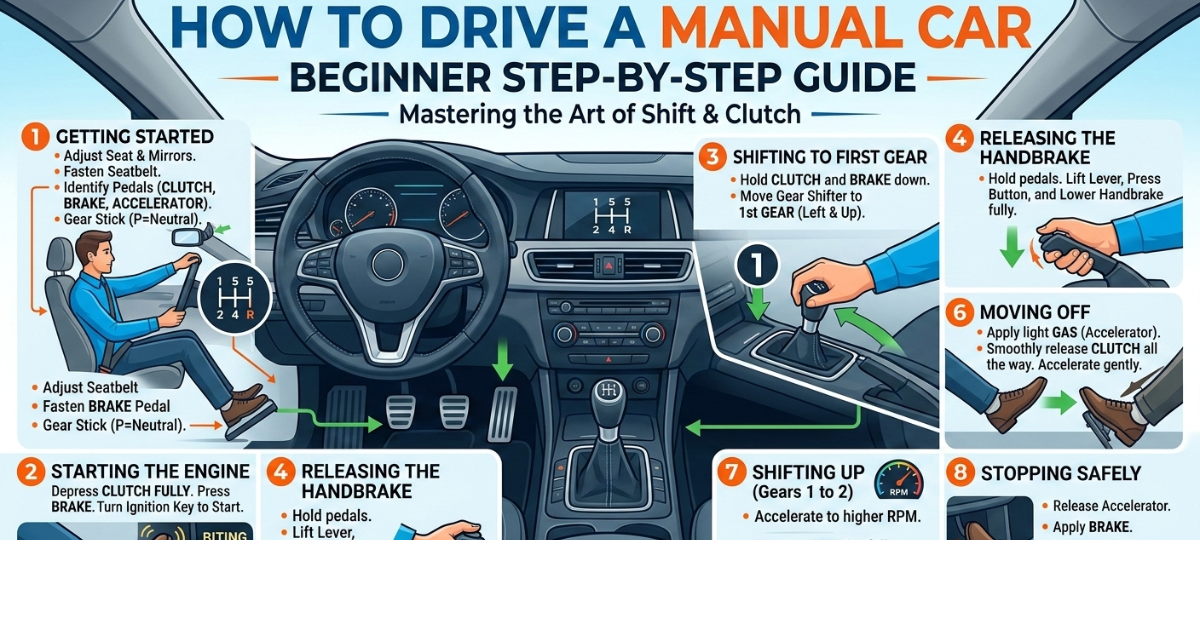
Clutch (Left pedal): Disconnects the engine from the wheels so you can change gears.
-
Brake (Middle pedal): Slows or stops the vehicle.
-
Accelerator (Right pedal): Controls speed.
The clutch is what makes manual driving different. Learning to control it properly is the key to mastering how to drive a manual car smoothly.
The Gear Shifter
The gear lever allows you to select different gears based on speed and driving conditions.
Typical gear layout:
-
1st Gear – Starting the car
-
2nd Gear – Low-speed driving
-
3rd Gear – City speeds
-
4th Gear – Faster city driving
-
5th/6th Gear – Highway speeds
-
Reverse (R) – Driving backward
Most cars display the gear pattern on top of the gear knob.
How to Drive a Manual Car Step by Step
If you’re trying to learn how to drive a manual car for beginners, follow this simple process.
Step 1: Adjust Your Seat and Mirrors
Before starting the car:
-
Sit comfortably with full access to the pedals.
-
Ensure you can press the clutch fully.
-
Adjust mirrors for proper visibility.
Proper positioning helps prevent mistakes while learning.
Step 2: Press the Clutch and Start the Car
Manual cars usually require the clutch to be pressed before starting.
-
Press the clutch pedal fully with your left foot.
-
Ensure the gear stick is in neutral.
-
Start the engine with the ignition key or push button.
Keep the clutch pressed during this step.
Step 3: Shift into First Gear
To begin moving:
-
Press the clutch fully.
-
Move the gear stick into 1st gear.
-
Keep your right foot on the brake.
Now you’re ready to move.
Step 4: Slowly Release the Clutch
This is where most beginners struggle.
The trick is finding the “biting point.”
Steps:
-
Slowly release the clutch.
-
The car will begin to vibrate slightly.
-
At the same time, gently press the accelerator.
-
Continue releasing the clutch slowly.
Once the clutch is fully released, the car will start moving smoothly.
Mastering this step is essential when learning how to drive a manual car smoothly.
Step 5: Shift to Higher Gears
As the car gains speed, you’ll need to change gears.
Typical gear shifting sequence:
-
Accelerate in 1st gear.
-
Press the clutch fully.
-
Move the gear stick to 2nd gear.
-
Slowly release the clutch while pressing the accelerator.
Continue shifting to higher gears as your speed increases.
Example speed ranges:
-
1st gear: 0–10 mph
-
2nd gear: 10–20 mph
-
3rd gear: 20–30 mph
-
4th gear: 30–40 mph
-
5th gear: 40+ mph
How to Stop a Manual Car
Stopping a manual car properly prevents stalling.
Follow these steps:
-
Press the clutch and brake together.
-
Shift the gear into neutral.
-
Release the clutch.
-
Keep the brake pressed until the car stops.
If you’re slowing down but not stopping, shift to a lower gear instead.
Tips for Driving a Manual Car Smoothly
Once you know the basics, these tips will help you improve your driving.
1. Practice Clutch Control
Smooth driving depends on clutch control.
Practice finding the biting point repeatedly in a safe area like an empty parking lot.
2. Avoid Riding the Clutch
Keeping your foot partially on the clutch can damage it.
Instead:
-
Fully release the clutch after shifting.
-
Rest your foot beside the pedal.
3. Listen to the Engine
Your engine sound tells you when to shift gears.
Signs you need to shift:
-
Engine becomes loud → shift up
-
Engine struggles → shift down
4. Practice Hill Starts
Hill starts are one of the hardest parts when learning how to drive a manual car for beginners.
Technique:
-
Engage the handbrake.
-
Release clutch to biting point.
-
Press accelerator gently.
-
Release the handbrake slowly.
This prevents the car from rolling backward.
Common Mistakes Beginners Make
Everyone stalls the car while learning—it’s completely normal.
Here are common mistakes to avoid:
-
Releasing the clutch too quickly
-
Forgetting to press the clutch when stopping
-
Shifting to the wrong gear
-
Using too much accelerator
-
Panicking when the car stalls
With practice, these mistakes disappear.
Benefits of Learning to Drive a Manual Car
Even though automatic cars are common, manual driving still has advantages.
Better Vehicle Control
You control exactly when the car changes gears.
Lower Purchase and Repair Costs
Manual vehicles are usually cheaper and simpler to maintain.
Improved Driving Skills
Drivers who learn how to drive a manual car often develop better overall driving awareness.
Ability to Drive More Vehicles
In many countries, knowing manual allows you to drive both manual and automatic cars.
FAQs
Is it hard to learn how to drive a manual car?
At first it can feel challenging, especially coordinating the clutch and accelerator. However, most beginners become comfortable within a few days of practice.
How long does it take to learn manual driving?
Most people learn the basics in 1–2 days, but mastering smooth gear shifts usually takes 1–2 weeks of regular practice.
What causes a manual car to stall?
A car stalls when the clutch is released too quickly without enough acceleration. The engine cannot maintain power, so it shuts off.
Can you learn manual driving by yourself?
Yes, but it’s safer and easier with an experienced driver or professional instructor guiding you.
Do manual cars save fuel?
In many cases, manual cars offer better fuel efficiency because drivers control the gear changes directly.
Conclusion
Learning how to drive a manual car may seem complicated at first, but it quickly becomes second nature with practice. Once you understand clutch control, gear shifting, and the rhythm between pedals, manual driving becomes smooth and enjoyable.
Start slowly, practice regularly, and don’t worry about occasional stalls—they’re part of the learning process. Soon you’ll confidently drive a manual car step by step, handle traffic smoothly, and enjoy the full control that manual transmission offers.
If you’re serious about improving your driving skills, consider exploring guides on clutch control techniques, hill starts, and defensive driving to take your manual driving to the next level.