
When you’re learning to drive, one of the most important skills to master is understanding hand signals for driving. These simple gestures can help you communicate with other drivers, ensuring that everyone stays safe on the road. Whether you’re preparing for your driving test or just want to refresh your knowledge, knowing the right hand signals is crucial.
In this article, we’ll cover the essential hand signals for driving, including the seven key signals you must know for your DMV driving test. We’ll also dive into the specific requirements for California, New Jersey, and other states, so you can confidently demonstrate your skills and pass your driving test.
What Are the Hand Signals for Driving?
Hand signals for driving are universally recognized gestures that help drivers indicate their intentions when driving. These signals are essential for times when your car’s signal lights may not be working, or when you’re riding a bicycle, where hand signals are often the primary form of communication.
Knowing these signals can make the difference between a smooth drive and a potentially dangerous situation. Below, we’ll cover the seven key hand signals for driving.
7 Key Hand Signals Every Driver Should Know
Whether you’re taking your driving test in California, New Jersey, or elsewhere, these seven hand signals are essential for safe driving.
-
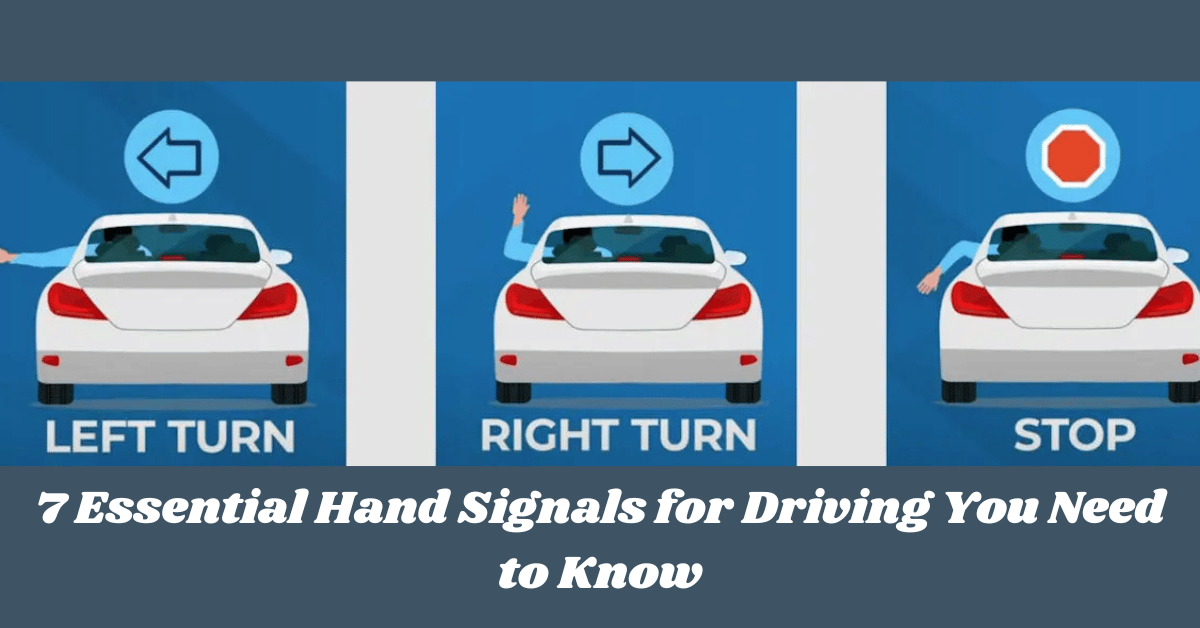
Left Turn Signal:
-
Signal: Extend your left arm straight out, parallel to the ground.
-
Purpose: Indicates that you’re turning left.
-
-
Right Turn Signal:
-
Signal: Raise your left arm to a 90-degree angle, with the elbow bent upwards.
-
Purpose: Signals a right turn.
-
-
Stop or Slow Down Signal:
-
Signal: Extend your left arm down, with your palm facing backward.
-
Purpose: Alerts other drivers that you are slowing down or stopping.
-
-
Right Turn (Right Hand Signal):
-
Signal: You can also extend your right arm out of the car window, horizontally, to signal a right turn.
-
Purpose: This is an alternative signal, used by some drivers, especially in California or other states with specific road test requirements.
-
-
Hand Signal for U-Turn:
-
Signal: Extend your left arm horizontally and make a wide sweeping motion to indicate a U-turn.
-
Purpose: Used for executing a U-turn safely.
-
-
Hand Signal for Lane Change:
-
Signal: Stick your arm out at a 45-degree angle.
-
Purpose: This indicates that you are changing lanes.
-
-
Emergency Stopping Signal:
-
Signal: Raise your arm high above your head and wave it back and forth.
-
Purpose: Used when you need to stop quickly or in an emergency situation, alerting other drivers to stop as well.
-
Hand Signals for Driving Test: California, New Jersey, and DMV Requirements
Every state has its own set of rules for the hand signals you must know during your driving test. However, most states follow a similar pattern with slight variations. Let’s break down the California and New Jersey requirements:
California Hand Signals for Driving Test
In California, the DMV hand signals for driving are crucial for your test. You must demonstrate that you can use all 7 hand signals for driving, including:
-
Left Turn: Extended left arm parallel to the ground.
-
Right Turn: Left arm bent at a 90-degree angle.
-
Stop/Slow Down: Left arm extended down with the palm facing back.
Do you need to know hand signals for the driving test in California? Yes, it’s a mandatory part of your test, especially if your vehicle’s turn signals aren’t working.
New Jersey Hand Signals for Driving Test
For New Jersey drivers, the hand signals are slightly more relaxed, but you should still practice the standard hand signals used across the nation:
-
Left Turn: Left arm extended out horizontally.
-
Right Turn: Left arm bent at 90 degrees or right arm extended straight.
-
Stop/Slow Down: Left arm extended down, palm facing backward.
DMV Hand Signals for Driving Test
Across all DMV tests, the general rule is to practice the 7 hand signals for driving, as they are part of the road test. For each state, make sure you learn the specific hand signals required for that region.
FAQs
1. What Are the Hand Signals for this Test?
Hand signals are important for signaling your turns, stops, and lane changes. For most driving tests, you’ll need to demonstrate left turn, right turn, stop/slow down, and emergency stop signals.
2. Do You Need to Know Hand Signals for the Driving Test?
Yes, knowing hand signals is part of the driving test in most states, including California and New Jersey. It’s important to practice these signals, even if your vehicle has functioning turn signals.
3. What Are the Hand Signals for Driving in California?
The California DMV requires you to know the basic hand signals for left turns, right turns, and stop/slow down. You’ll also need to demonstrate them during your driving test.
4. How Many Hand Signals Do I Need to Know for My Road Test?
Typically, you need to know 7 hand signals for driving, including the signals for turning, stopping, and emergency situations.
5. Can I Use My Car’s Turn Signal Instead of Hand Signals?
In most cases, you can use your car’s turn signal, but if it’s not working or you’re on a driving test, you must use the correct hand signals.
Conclusion:
Now that you’re familiar with the 7 hand signals for driving, it’s time to practice them regularly, especially if you’re preparing for your test. Remember, hand signals can help keep you and other drivers safe on the road. Whether you’re driving in California, New Jersey, or another state, knowing these signals is a crucial part of being a responsible driver.
If you’re looking for more tips on passing your driving test or improving your road safety knowledge, check out our other articles. Stay safe and happy driving!